



5 Safe Resistance Band Exercises Recommended by Physiotherapists for Neck Strain Relief
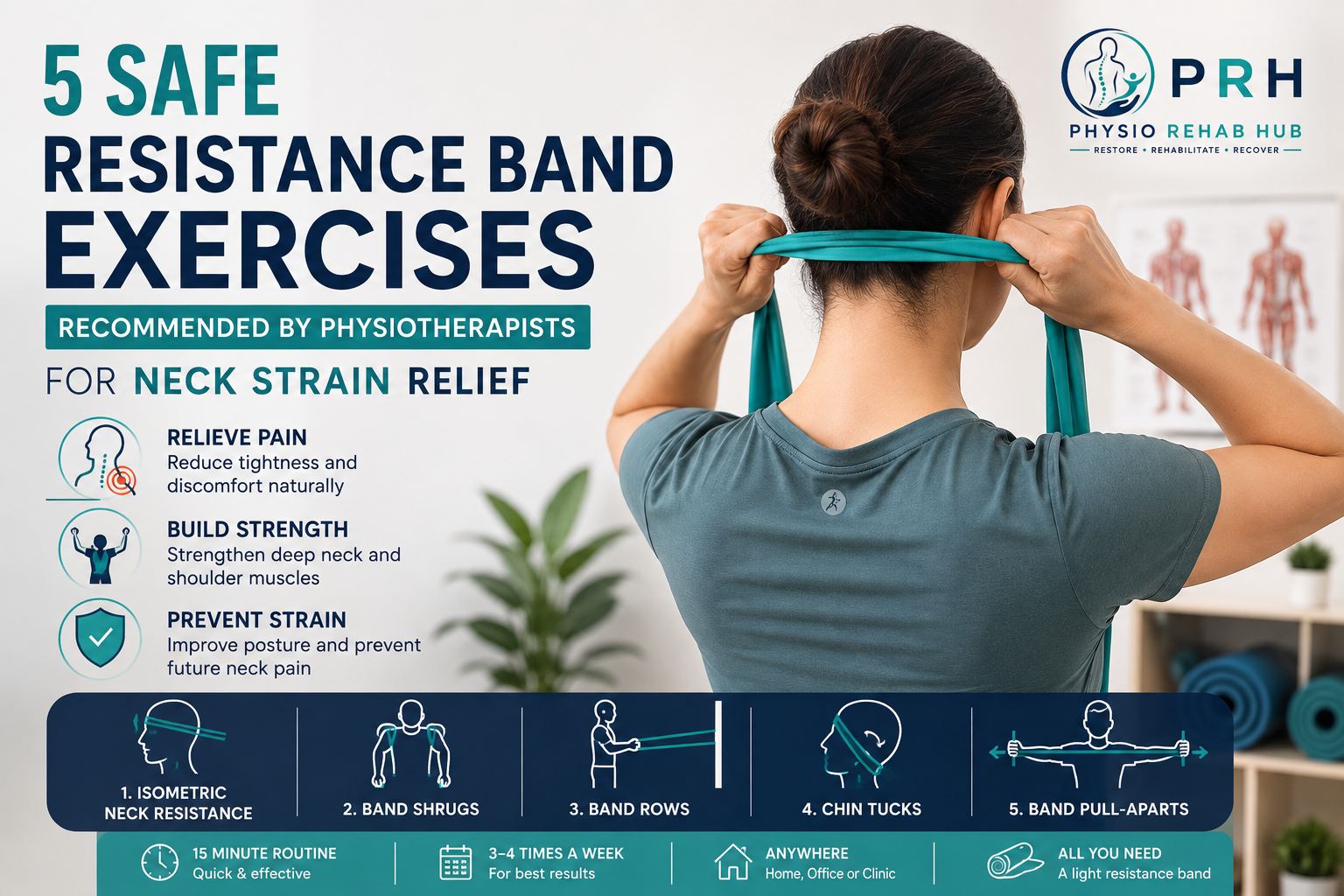
5 Safe Resistance Band Exercises Recommended by Physiotherapists for Neck Strain Relief
Neck strain is one of the most common complaints physiotherapists treat — and one of the most preventable. Hours at a desk, phone-scrolling posture, and weak deep neck stabilizer muscles all contribute to that tight, achy feeling at the base of your skull and across your shoulders.
The good news: you don't need heavy equipment to fix it. A single resistance band, used correctly, can relieve current strain and build the neck strength that prevents it from coming back. Here are five exercises physiotherapists commonly recommend, with instructions on how to do them safely.
Medical disclaimer: This article is for general information only and isn't a substitute for a diagnosis or treatment plan from a doctor or physiotherapist. If your neck pain includes numbness, tingling or weakness down an arm, followed a trauma or fall, or hasn't improved after a week of rest, see a doctor before starting these exercises.
Before You Start
- Use a light-resistance band — neck exercises need control, not heavy load
- Move slowly through each rep; if anything sharp or shooting comes on, stop
- Do these 3–4 times a week, not daily — the muscles need recovery time too
- Sit or stand tall with relaxed shoulders throughout every exercise
1. Isometric Neck Resistance (Front, Back, and Sides)
This is usually the first exercise introduced because it builds strength without moving the neck at all — ideal when there's still some active pain.
How to do it:
- Hold the band in both hands and loop it around the back of your head, holding the ends in front
- Gently press your head back into the band without letting your head actually move
- Hold for 5 seconds, release, repeat 8–10 times
- Repeat the same idea pressing forward (band behind your hands, pressing head forward), and to each side
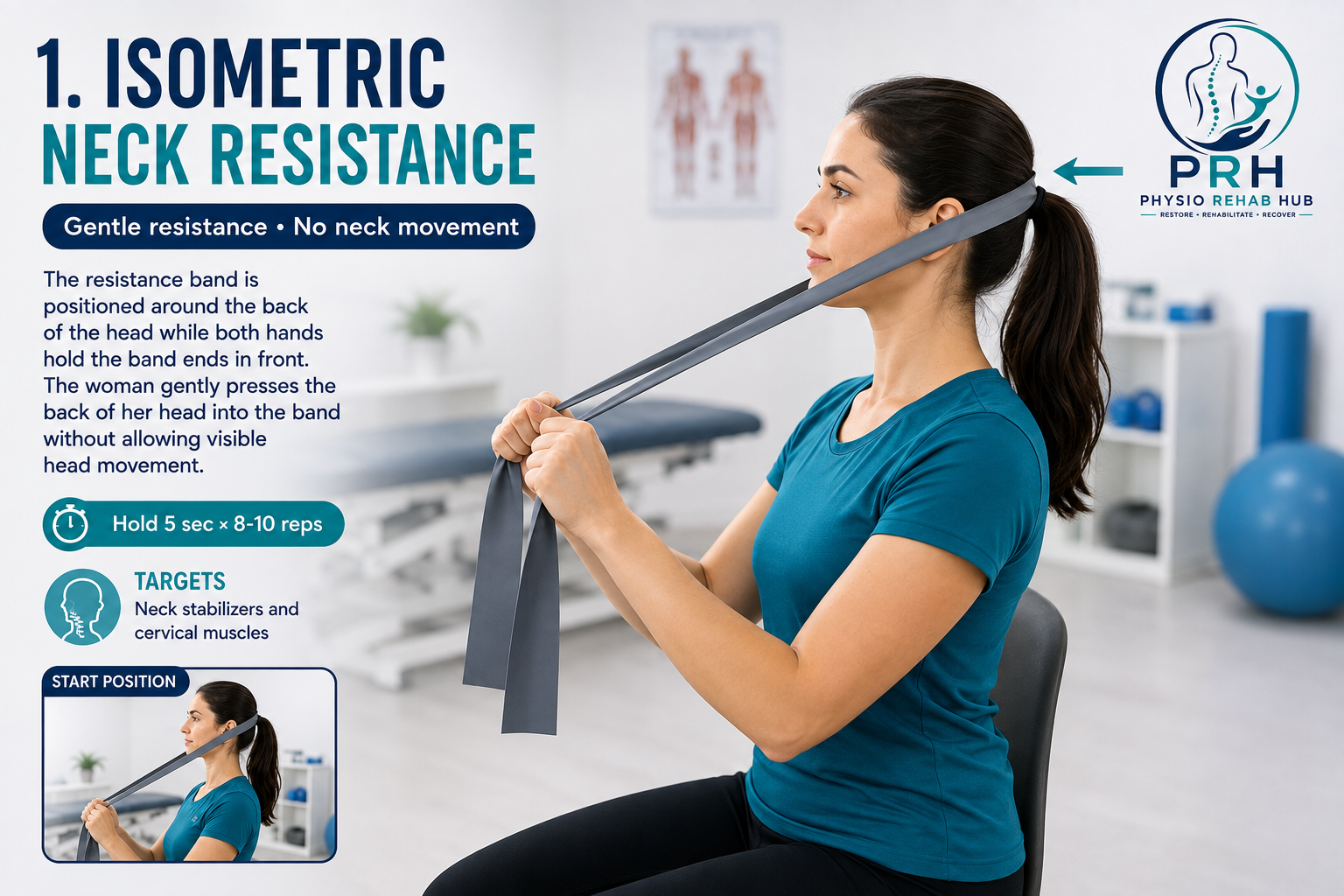
Why it helps: Isometric holds strengthen the deep neck stabilizers that support posture, without straining an already irritated joint.
2. Band Shrugs for Upper Trapezius Support
Neck strain often isn't just the neck — it's tight, overworked trapezius muscles pulling on it. This exercise offloads that tension.
How to do it:
- Stand on the middle of the band with feet shoulder-width apart, holding one end in each hand
- With arms straight down by your sides, shrug your shoulders straight up toward your ears
- Hold for 2 seconds at the top, lower slowly
- 10–12 reps
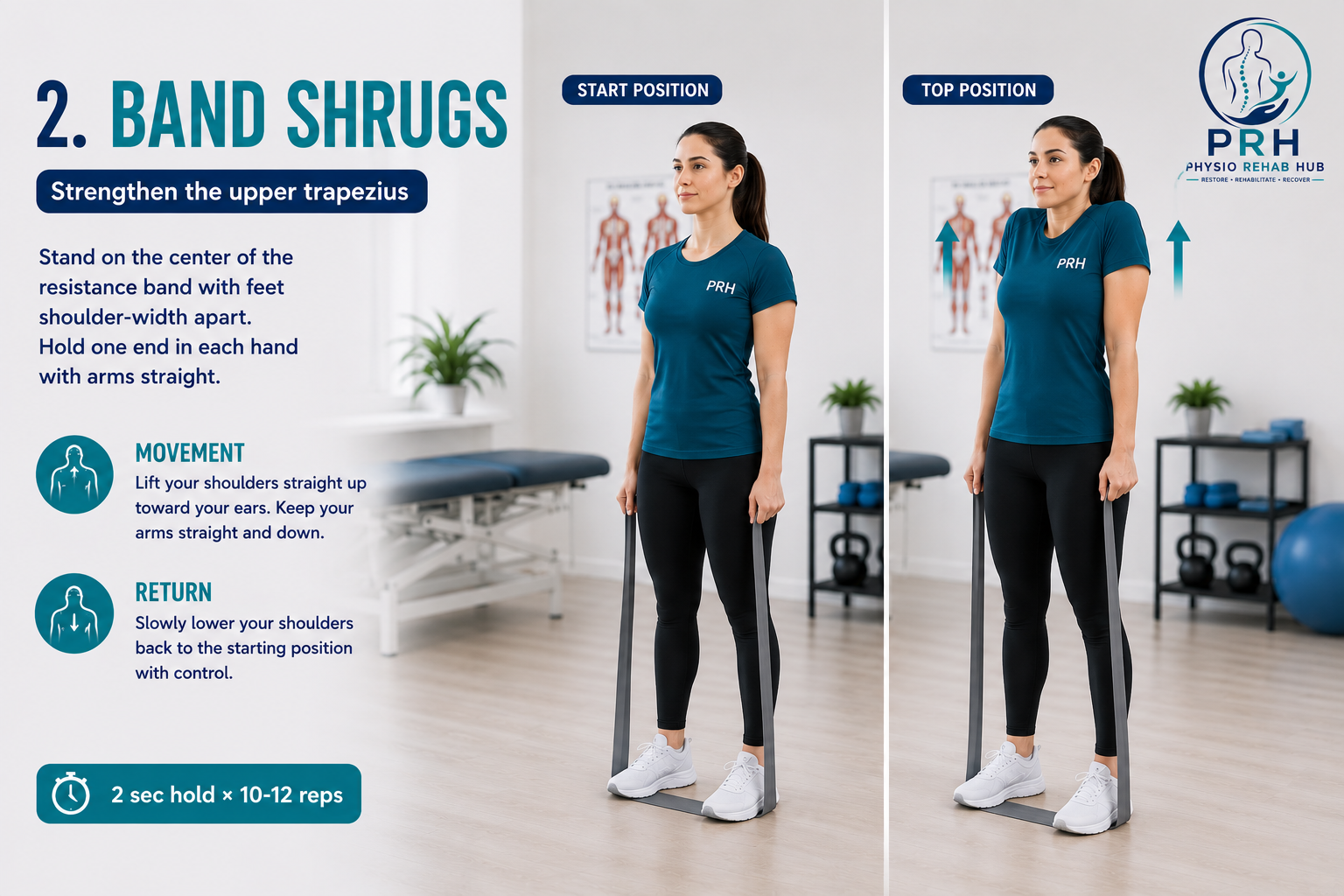
Why it helps: Strengthening the trapezius reduces the compensatory tension that builds up when neck muscles are overworked.
3. Band Rows for Postural Correction
Forward head posture — the classic "tech neck" — is one of the biggest drivers of chronic neck strain. This exercise directly counters it.
How to do it:
- Anchor the band at chest height (looped around a door handle or sturdy object)
- Hold an end in each hand, arms extended, standing tall
- Pull both elbows back, squeezing your shoulder blades together, keeping your chin tucked
- Hold for 1–2 seconds, return slowly
- 10–12 reps
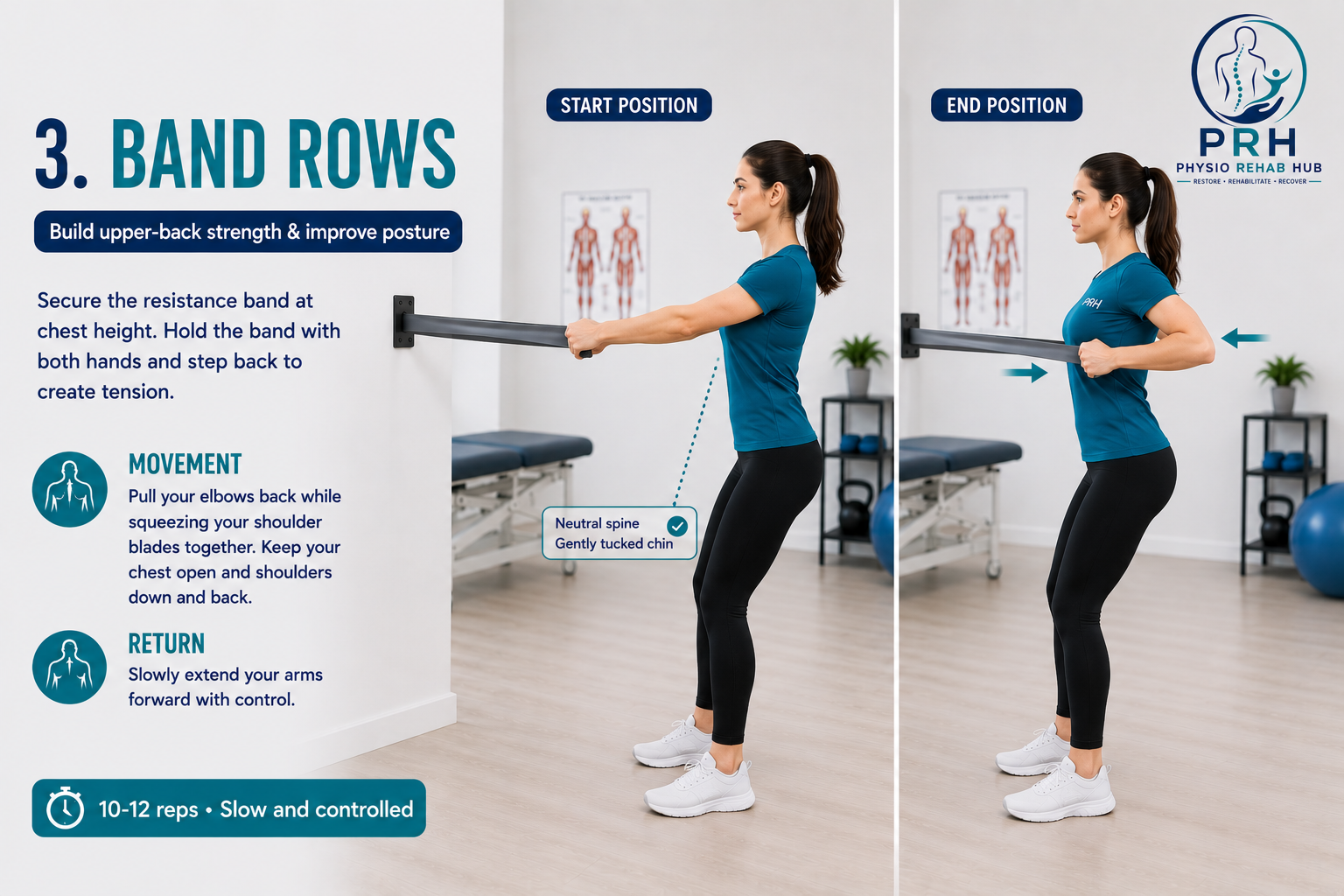
Why it helps: Strengthening the mid-back muscles pulls the shoulders back, which takes direct pressure off the neck by correcting the forward-head position that causes strain in the first place.
4. Chin Tucks with Band Resistance
This targets the deep neck flexors — small muscles that are frequently weak in people with chronic neck strain but rarely trained.
How to do it:
- Loop the band around the back of your head, holding the ends at your temples/forehead level
- Gently tuck your chin straight back (like making a "double chin"), resisting slightly against the band
- Hold for 3–5 seconds, release
- 10 reps
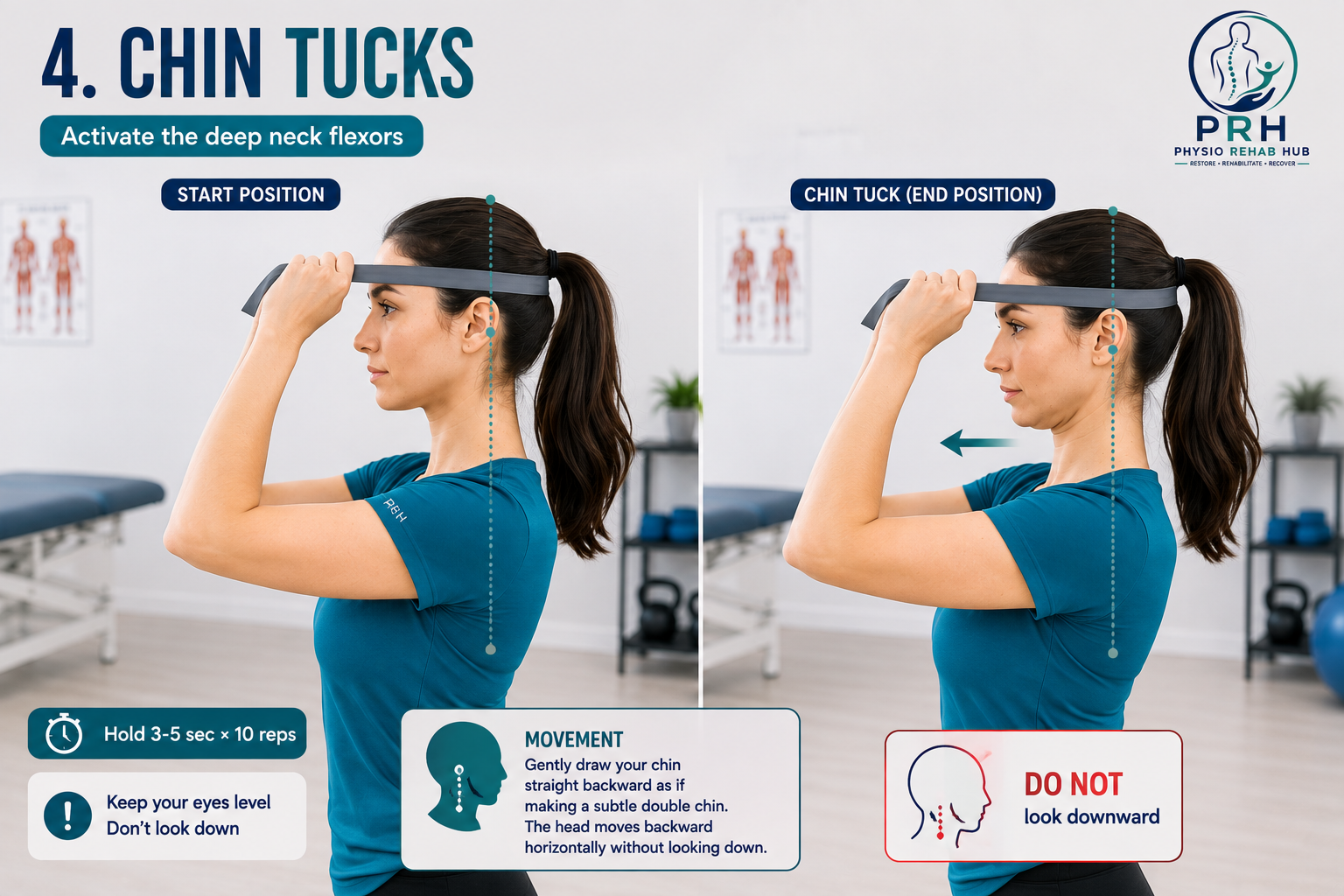
Why it helps: Strong deep neck flexors are one of the most consistent findings in research on people who recover well from chronic neck pain — this exercise trains exactly those muscles.
5. Band Pull-Aparts for Shoulder-Neck Stability
Neck strain and shoulder blade weakness go hand in hand. This exercise builds the stability that keeps both in check.
How to do it:
- Hold the band with both hands in front of you, arms extended at chest height
- Pull the band apart by drawing your arms out to the sides, squeezing shoulder blades together
- Return slowly to the start
- 10–12 reps
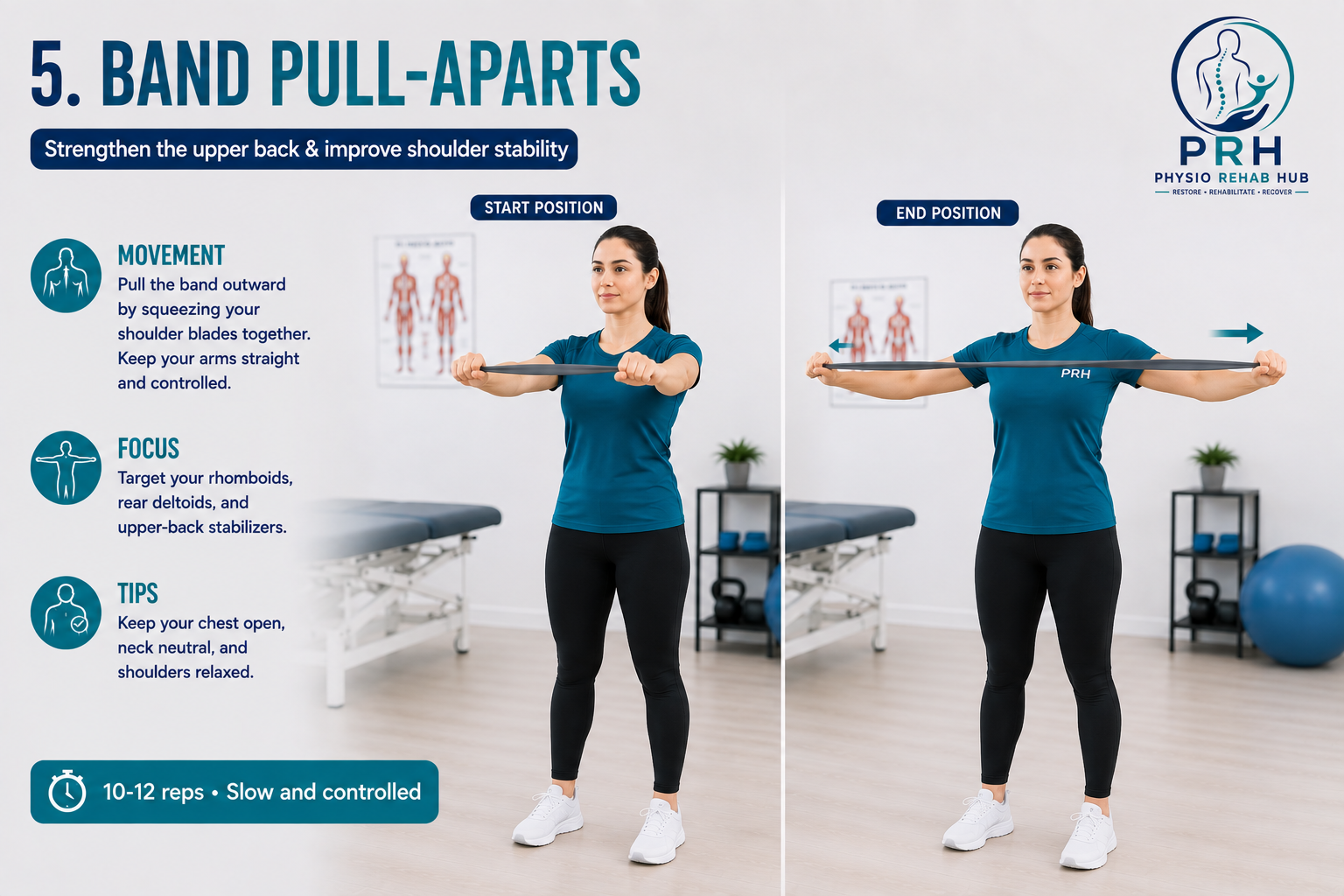
Why it helps: Strengthens the rhomboids and rear deltoids, which support good posture throughout the day — the single biggest factor in preventing neck strain from returning.
Putting It Together: A Simple Weekly Routine
| Exercise | Sets x Reps | Frequency |
|---|---|---|
| Isometric Neck Resistance | 2 x 8–10 (each direction) | 3–4x/week |
| Band Shrugs | 2 x 10–12 | 3–4x/week |
| Band Rows | 2 x 10–12 | 3–4x/week |
| Chin Tucks | 2 x 10 | 3–4x/week |
| Band Pull-Aparts | 2 x 10–12 | 3–4x/week |
A full routine takes about 15 minutes and can be done at a desk, at home, or between clinic sessions.
When to See a Physiotherapist Instead
Book a consultation rather than self-treating if you notice:
- Pain radiating down an arm, or numbness/tingling in the hand
- Neck pain following an injury, fall, or accident
- Headaches that consistently start at the base of the skull
- No improvement after 1–2 weeks of consistent exercise
Key Takeaways
- Most neck strain comes from weak deep stabilizers and poor posture, not a single injury
- A single light resistance band is enough to address both — no gym or heavy equipment required
- Consistency (3–4x/week) matters more than intensity for lasting relief
- Persistent or radiating pain is a sign to get a professional assessment rather than pushing through
Ready to start? Shop our physiotherapist-recommended resistance bands — the same light-resistance bands used in the exercises above. Not sure if resistance training is right for your neck pain? Book an online physiotherapy consultation for a personalized assessment.